
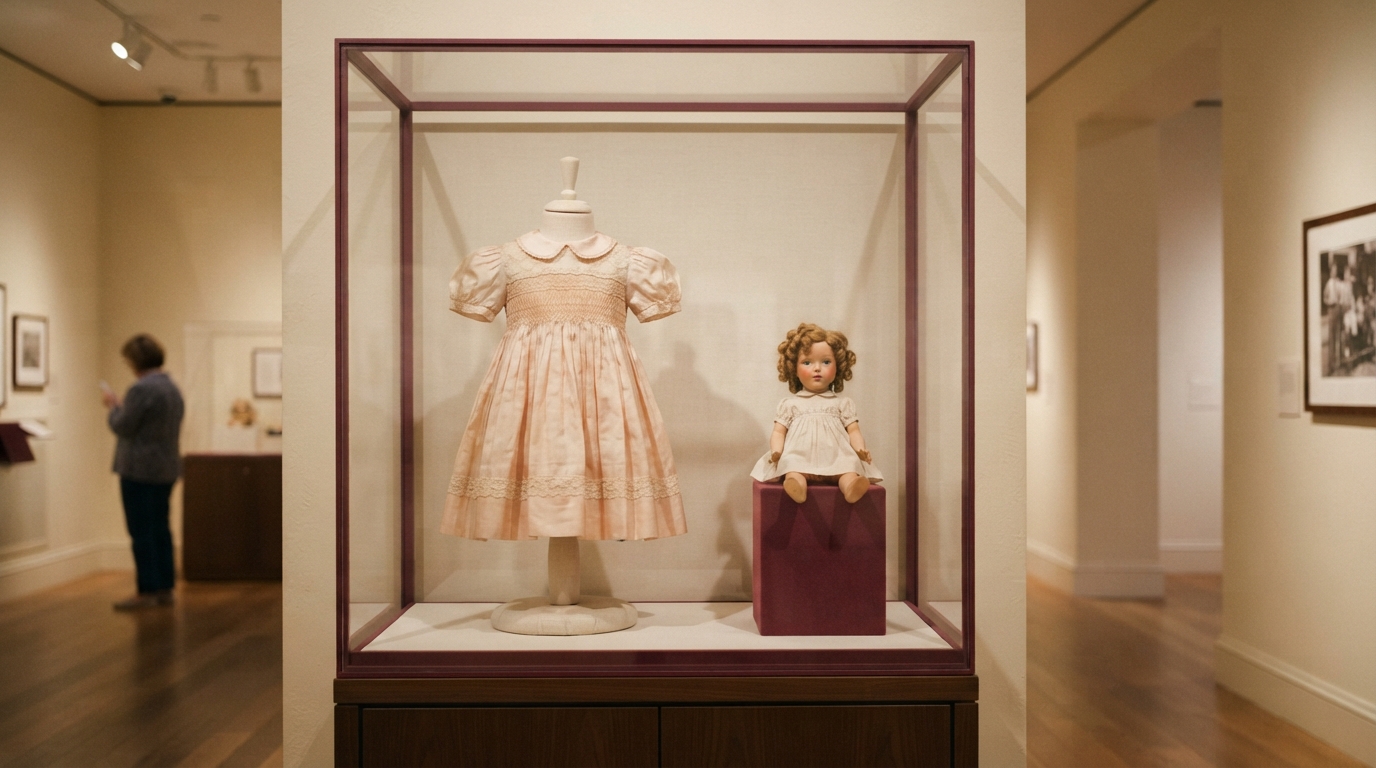
A film costume can preserve more than a familiar screen image. Its child-sized proportions invite us to think about the young performer inside it: learning movements, wearing a character’s clothes, and working while still growing up. Shirley Temple memorabilia offers a starting point for exploring that relationship between a public career and a private childhood.
In 2015, the Santa Monica History Museum presented Love, Shirley Temple, a temporary exhibition drawn from her personal childhood collection. Looking back at its records reveals a story about performance, family preservation, and the connections between a celebrated person and her birthplace.
Remembering the Museum’s 2015 Exhibition
The museum’s archived Love, Shirley Temple announcement lists a preview reception on June 3, 2015, followed by public exhibition dates from June 4 through June 10, 2015. The presentation formed part of a traveling exhibition sponsored by Theriault’s.
Its advertised subjects included movie costumes, dolls, and childhood memorabilia from Temple’s personal archives. The historical schedule also included lectures, making the objects part of a broader conversation about her career.
The announced speakers included Marilyn Granas, identified as Temple’s stand-in. That detail opens another avenue of inquiry: whose work helped bring the screen performances into being?
This was a past exhibition, not an invitation to an event happening now. Its surviving announcement is useful as a record of what the museum presented and how it introduced the collection.
A Santa Monica Childhood on a National Stage
The National Women’s History Museum’s biography records Temple’s birth in Santa Monica on April 23, 1928. Her mother enrolled her in dance school in 1931, and opportunities in short films followed. Her local connection therefore begins with a documented birthplace, not simply an association with Hollywood.
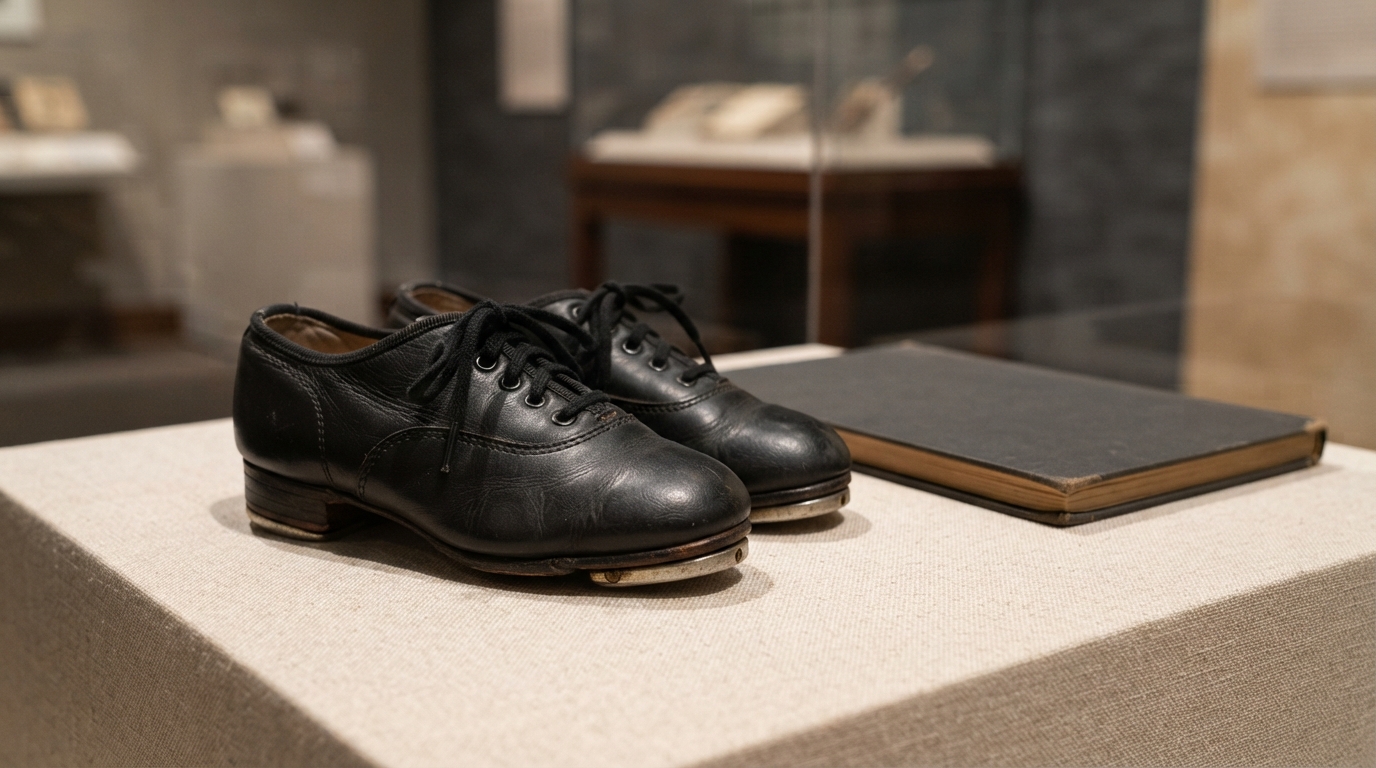
The Academy’s record of the 1935 Oscars places her special award at the February 27 ceremony honoring the previous year’s films. She was six years old. That early recognition gives the childhood objects a different weight: they belonged to someone whose professional identity developed extraordinarily young.
When considering a costume or toy, keep both identities in view. A famous performer could also be a child receiving gifts, forming attachments, and accumulating possessions that her family considered worth keeping.
The Family Archive Behind the Famous Image
Theriault’s account of the 2015 collection sale credits Gertrude Temple with beginning to preserve these materials when Shirley was five. It describes the collection passing through the care of Gertrude, Shirley Temple Black, and her children before the auction.
Gertrude’s role changes the story from one about celebrity possessions to one about the work of remembering. Consider what becomes possible when an object remains connected to a photograph, a name, or a personal recollection rather than surviving as an unidentified keepsake.
Costumes: Clothing With a Working Life
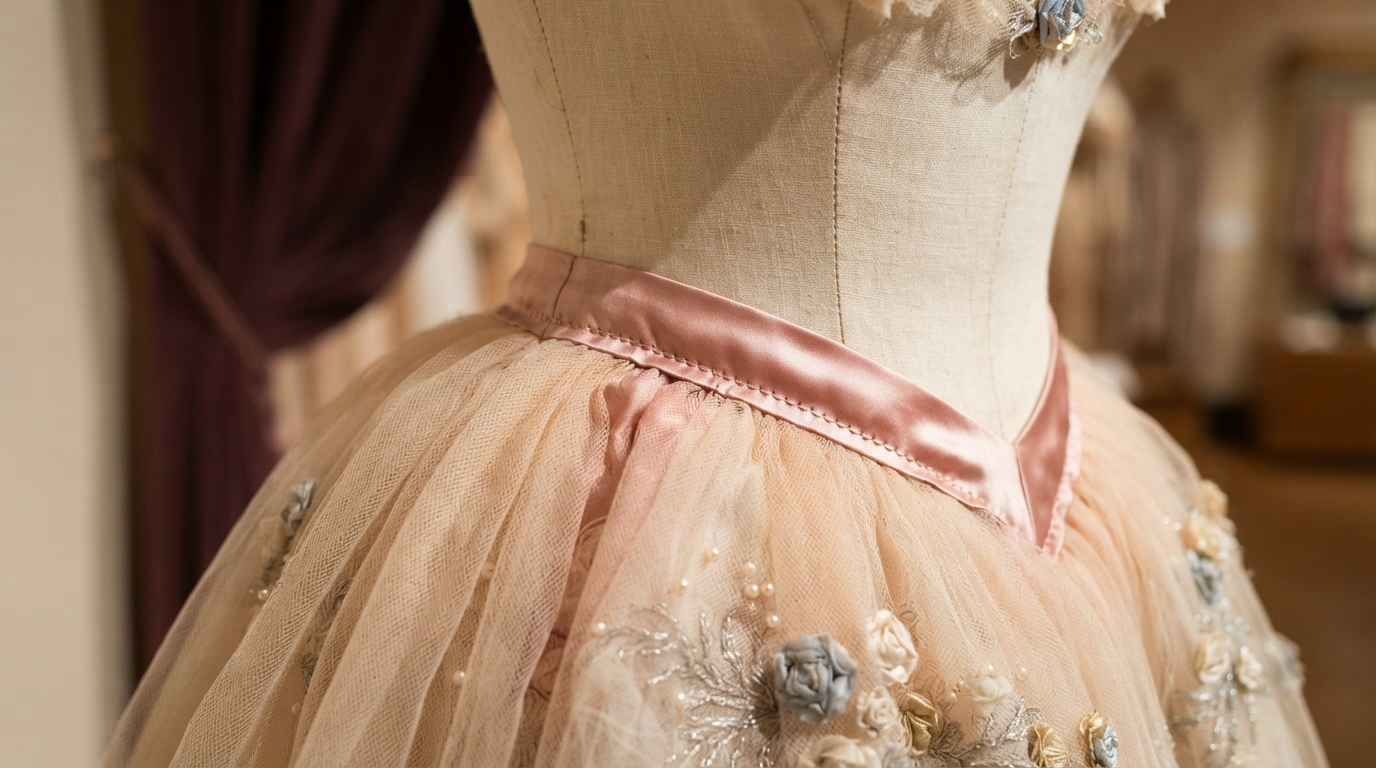
One detailed example in the wider collection is the dance costume cataloged from Baby Take a Bow. Theriault’s describes coral-pink tulle, a satin bodice, and floral trimming, linking the garment to the 1934 film and an accompanying photograph of Temple wearing it.
The catalog also credits costume designer Royer. His presence in the record is a reminder to look beyond the famous wearer and consider the creative work involved in shaping a character’s appearance.
That record connects fabric with a documented performance. It is an example from the related auction archive, not proof that this particular costume occupied a case in the 2015 Santa Monica display.
Dolls: Possessions and Public Identity
A doll raises another set of questions. Was it a plaything, a gift, a screen prop, or an object depicting the performer herself? Those possibilities should not be treated as interchangeable. The object’s description and history determine which interpretation fits.
A circa-1934 Ideal Shirley Temple doll in the auction catalog wears a version of her Stand Up and Cheer costume. The record also mentions a photograph of Temple holding a smaller model. Here, a doll in the wider family collection also represents its famous owner, suggesting an intriguing overlap between childhood possessions and a commercial public image.
Looking at familiar belongings this way also connects with our discussion of the Food & Family exhibition. In both cases, the useful question is how personal materials help tell a history larger than the individual object.
What Happened After the Traveling Exhibition?
The Love, Shirley Temple auction catalog records the sale in Kansas City, Missouri, on July 14, 2015. Its listings document the wider collection of costumes, dolls, playthings, and memorabilia, rather than functioning as a checklist for the Santa Monica exhibition.
The distinction matters when tracing ownership. Displaying family materials during a traveling exhibition does not establish that a museum owned everything shown. Likewise, an auction entry does not prove that every listed object appeared at every tour stop.
Read the records as connected but different sources: an exhibition announcement explains a public presentation, while a catalog identifies objects offered for sale. Together, they help reconstruct the collection’s journey without turning assumptions into facts.
The Story Continued in Santa Monica
The museum later announced Shirley Temple: Santa Monica’s Biggest Little Star for April 16 through July 1, 2016. Its description extended the story beyond film into Temple’s adult life and diplomatic career, while explaining that museum members had acquired items at the earlier auction.
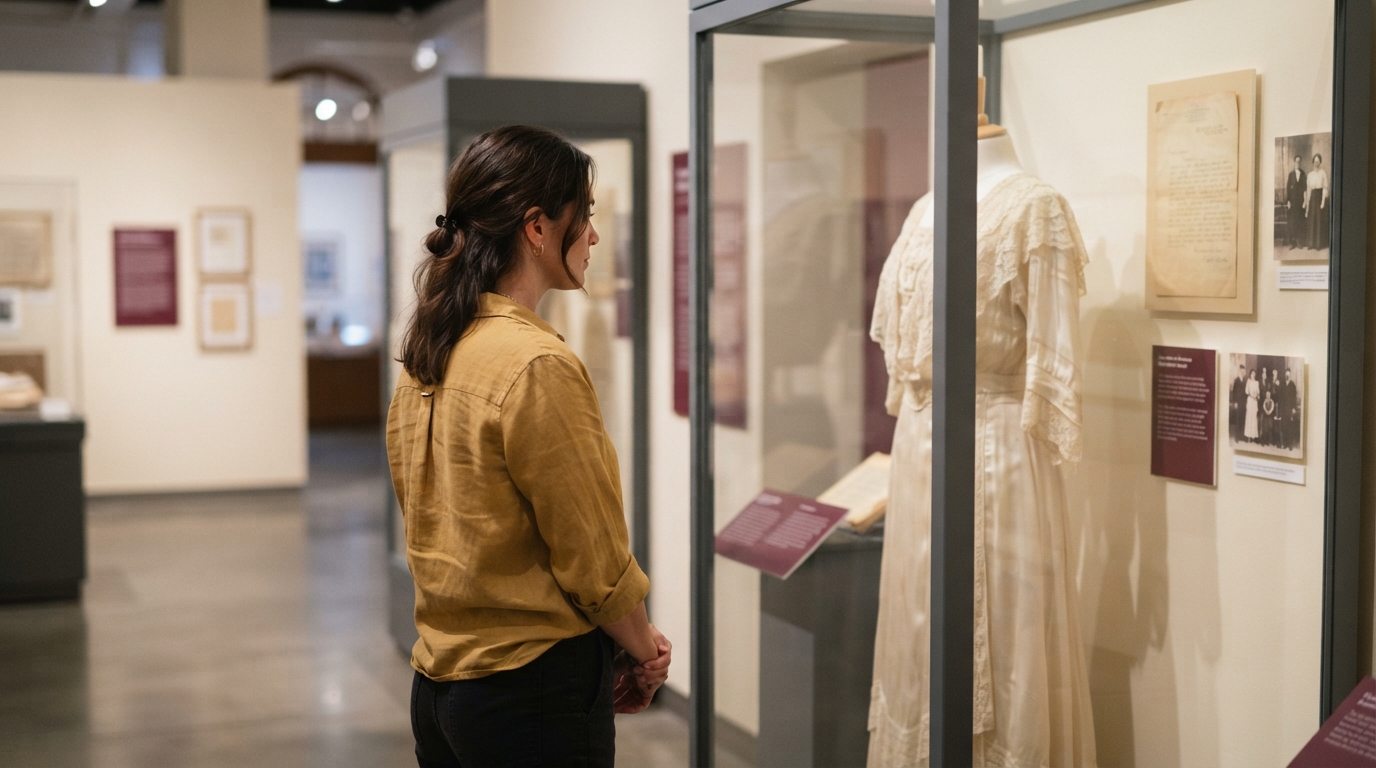
The museum’s description listed the red polka-dot dress from Stand Up and Cheer, a dress associated with Bright Eyes, and Temple’s birth certificate among the materials it planned to display. These named objects belong to the documentation of the later presentation; they should not automatically be assigned to the 2015 exhibition.
The birth certificate is especially relevant to a local-history interpretation. Beside film-related objects, a document recording where someone’s life began offers another way to connect a nationally recognized figure with Santa Monica.
Remembering a Life Beyond Childhood Stardom
The State Department’s record of Shirley Temple Black’s diplomatic service documents her ambassadorship to Ghana from 1974 to 1976, service as chief of protocol from 1976 to 1977, and ambassadorship to Czechoslovakia from 1989 to 1992.
Those later responsibilities remind us that a childhood collection represents part of a life, not its final definition. The familiar costumes deserve attention, but so does the adult whose work continued beyond the screen.
Continue exploring our People & Their Stories section, which focuses on lives documented through collections and exhibitions. Revisiting Shirley Temple memorabilia is most rewarding when recognition becomes curiosity about the person, the people who preserved her belongings, and the records that connect them.
This retrospective is published by an independent museum journal. It is not affiliated with or operated by the Santa Monica History Museum.