It is easy to admire a finished basket without thinking about how its shape was built, strand by strand. A making activity offers a different starting point: what must the maker notice, adjust, and remember? Those questions provide a useful way to approach the Santa Monica History Museum’s October 2026 basket weaving workshop.
Part of the museum’s Hands on History programming, the event brings a practical activity together with historical interpretation. For families, the opportunity is not simply to complete a craft project, but to become more curious about the knowledge behind everyday objects.
October Workshop Details and What to Expect
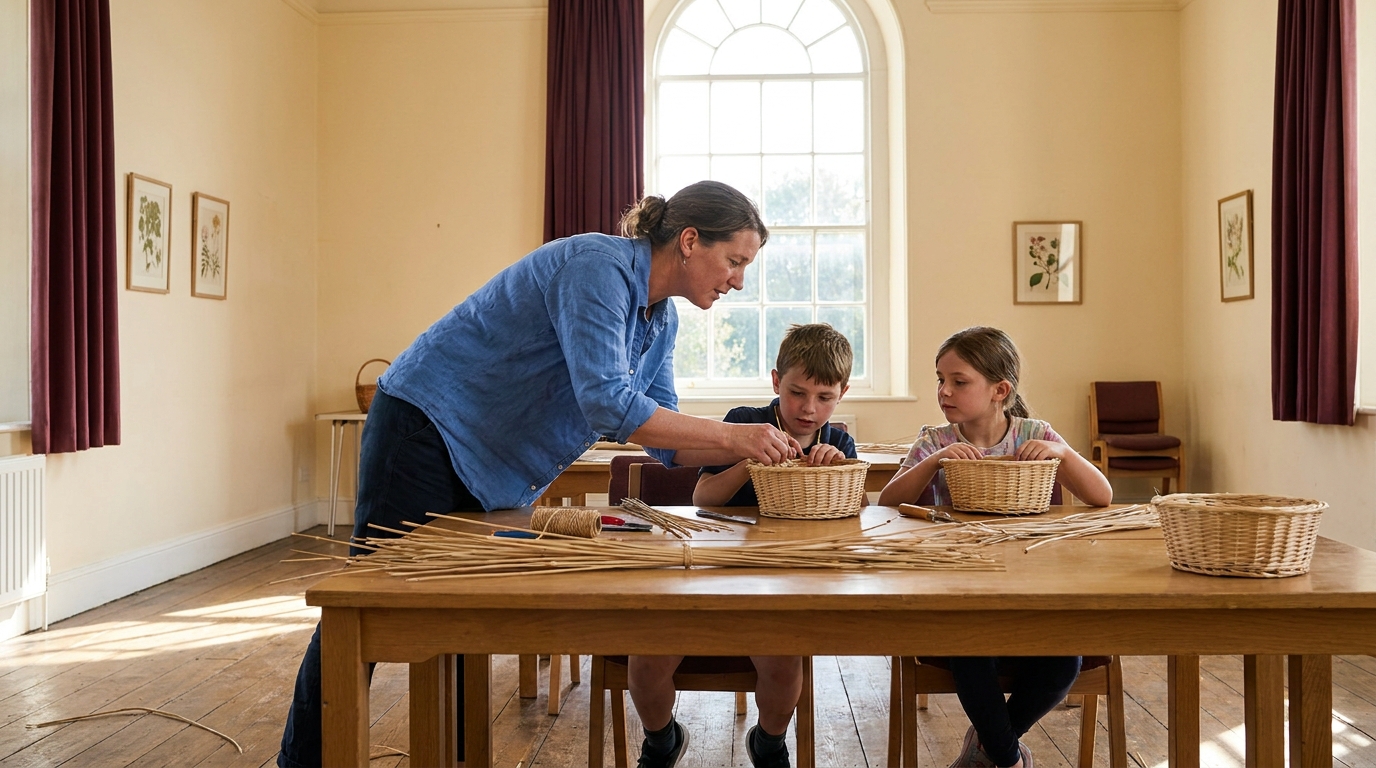
The official basket weaving workshop listing schedules the event for October 17, 2026, from 1 p.m. to 3 p.m. at the Santa Monica History Museum. Carolyne Edwards of the Quinn Research Center will lead the basket-making activity and discuss its historical traditions.
The event description recommends this session for children ages eight and older, while welcoming all ages. It also requests an RSVP. Families with younger children should consider that distinction when deciding whether the activity fits their interests and abilities.
The museum describes Hands on History as a free family workshop series combining a history lesson with an activity. Its general description mentions a different usual schedule, so use the October event’s specific afternoon time. Confirm any admission or materials arrangements when responding to the invitation.
The event page does not specify the weaving method, supplies, or a detailed lesson plan. The historical examples below are background reading, not a confirmed outline of what participants will make.
Why Basket Making Belongs in a History Museum
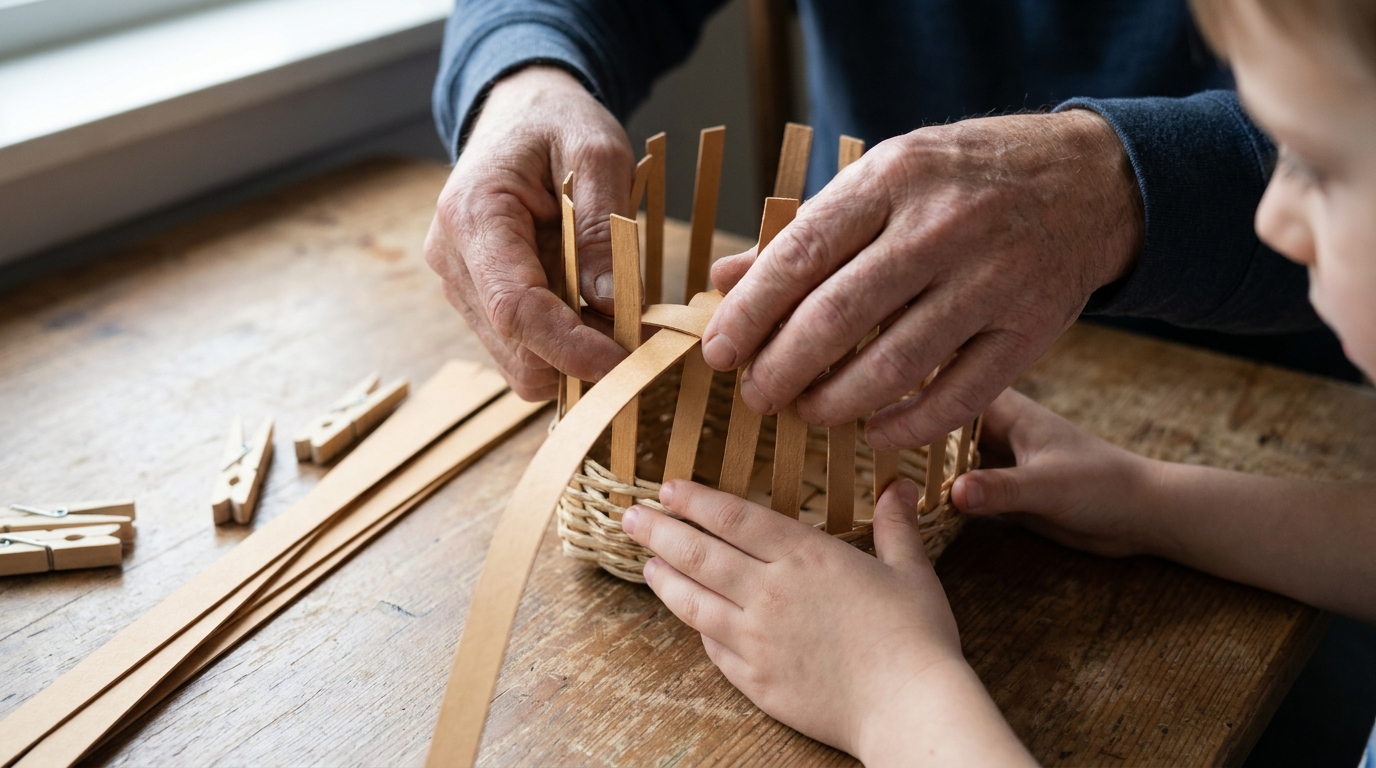
Try looking at a basket as a sequence of decisions rather than a finished decoration. Why is its opening wide or narrow? How is the base supported? What keeps the edge from coming apart? These questions turn attention toward the work behind the object.
During a making activity, choose one detail to follow closely. Watch how the instructor begins, where additional material enters, and how the shape changes. Instead of judging the result only by neatness, consider which decisions were hardest to understand or repeat.
This approach also connects with our article about the Corona typewriter in the museum’s Outlook Collection. Although a typewriter and a basket serve different purposes, both invite questions about how people worked. The aim is to connect visible features with evidence, rather than inventing a history from appearance alone.
Back in a gallery, apply the same attention without touching collection objects. Look for the maker’s name, materials, date, and recorded purpose on the label. Notice which questions the museum can answer and which remain open.
Look Closely at Materials and Making
For a documented example beyond Santa Monica, the National Park Service’s video Sharing Cultural Traditions: Making a Work Basket introduces Emily Dayhoff, a Southern Sierra Miwuk and Chukchansi cultural demonstrator at Yosemite. The video focuses on gathering materials and making an open-twined willow work basket.
This example encourages viewers to consider preparation alongside construction. Where does the material come from, and what must happen before weaving begins? It also identifies a particular maker and context rather than presenting every basket as an interchangeable craft.
Questions to Bring to the Activity
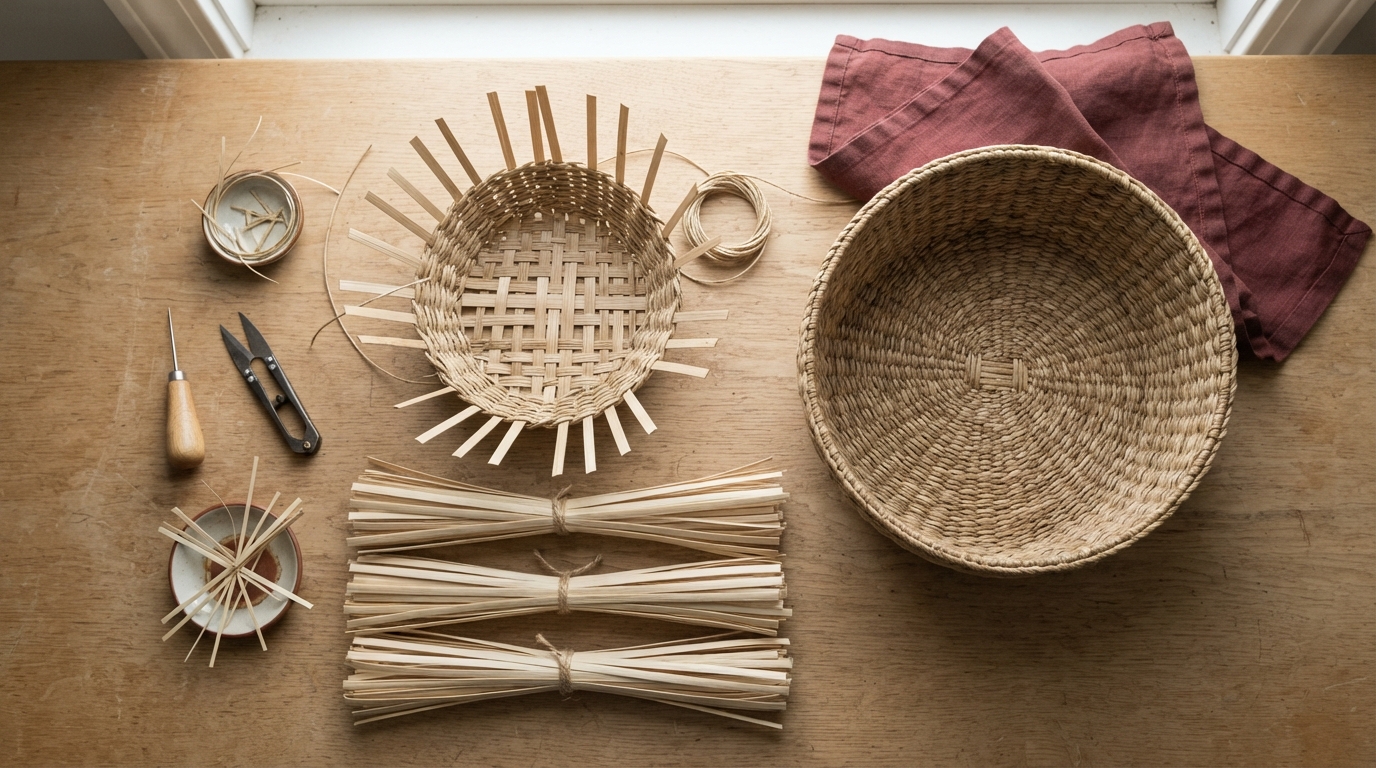
Ask which materials the workshop uses and why they suit the project. How should participants hold them? What happens when the spacing changes? Follow the instructor’s method rather than assuming that techniques seen in another demonstration will apply.
Notice the difference between observing a process and mastering it. A short session can generate questions for further learning without representing the full knowledge involved in another maker’s practice.
Understanding Basketry as a Living Tradition
Historical context should include the people whose knowledge makes an object meaningful. The Smithsonian National Museum of the American Indian’s Basketry: Weaving Traditions resource discusses California Native basketry through connections among gathering, care for plants, community knowledge, and continuing artistic practice.
Its examples offer a reminder not to describe Native basketry only in the past tense. They also encourage readers to distinguish among makers and communities instead of treating different traditions as a single decorative style.
A Documented Basket With Regional Connections
The museum’s separate record for a coin basket attributed to Juana Basilia Sitmelelene, a Chumash weaver, dates it to approximately 1815 to 1822. The record combines information about materials and design with accounts of the maker’s life and the pressures of the mission period.
Its biographical discussion connects her birthplace with a village that may have been in the Santa Monica Mountains, while acknowledging uncertainty about the exact location. That qualification matters: regional connections should remain as precise as the evidence allows.
This Smithsonian basket is not identified as an object in the October workshop. It is a separate example of how careful museum interpretation can connect skilled making with an individual life.
Helping Children Explore Without Rushing
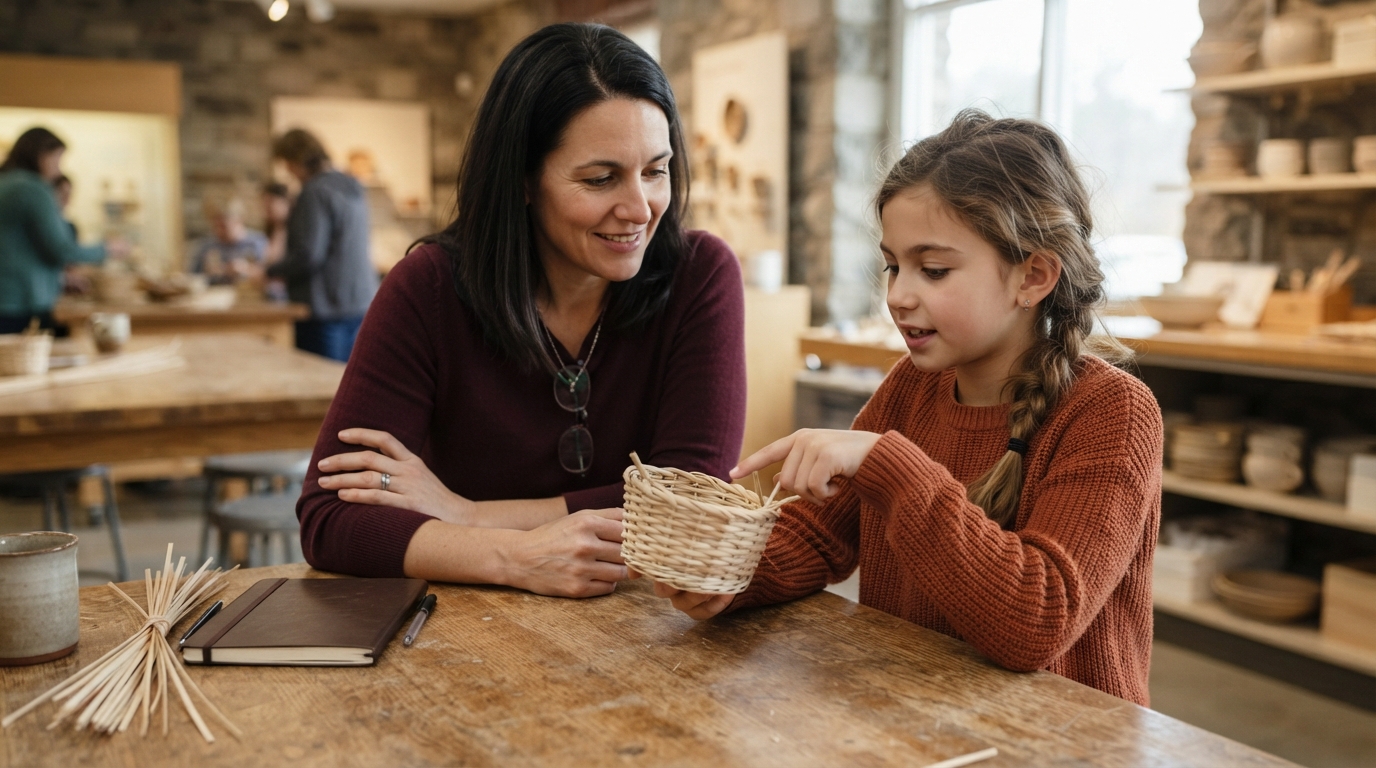
Consider giving the session a process-based goal: learn how one part of a basket holds together, rather than produce a perfect result. When a child encounters difficulty, ask what changed between the last successful step and the current attempt. Leave room for the instructor to demonstrate again.
A parent or caregiver can support the conversation without taking over the work. Ask the child to describe a step in their own words or point out a detail they had not noticed before. Their explanation can become the starting point for another question.
Discuss the people behind the techniques as well as the techniques themselves. Who shared the information? Which community or historical setting was discussed? Keeping those connections attached to the activity helps distinguish learning about a tradition from simply copying its appearance.
Planning a Thoughtful Museum Afternoon
Before attending, revisit the official event listing for changes and complete the requested RSVP. Ask about accompanying adults, access needs, and anything participants should bring. Do not assume that a general workshop description answers every question about this particular session.
Afterward, invite each participant to share one observation about making and one question about history. A remembered explanation, an unexpected difficulty, or curiosity about a material can all provide a useful next step.
The basket weaving workshop offers an occasion to look beyond an object’s finished surface. Approached with patience and attention to its historical context, the activity can become the beginning of a more thoughtful conversation about makers, materials, and museum collections.
This independent event preview was checked on September 10, 2026. It is not published by or affiliated with the Santa Monica History Museum. Event arrangements may change.