
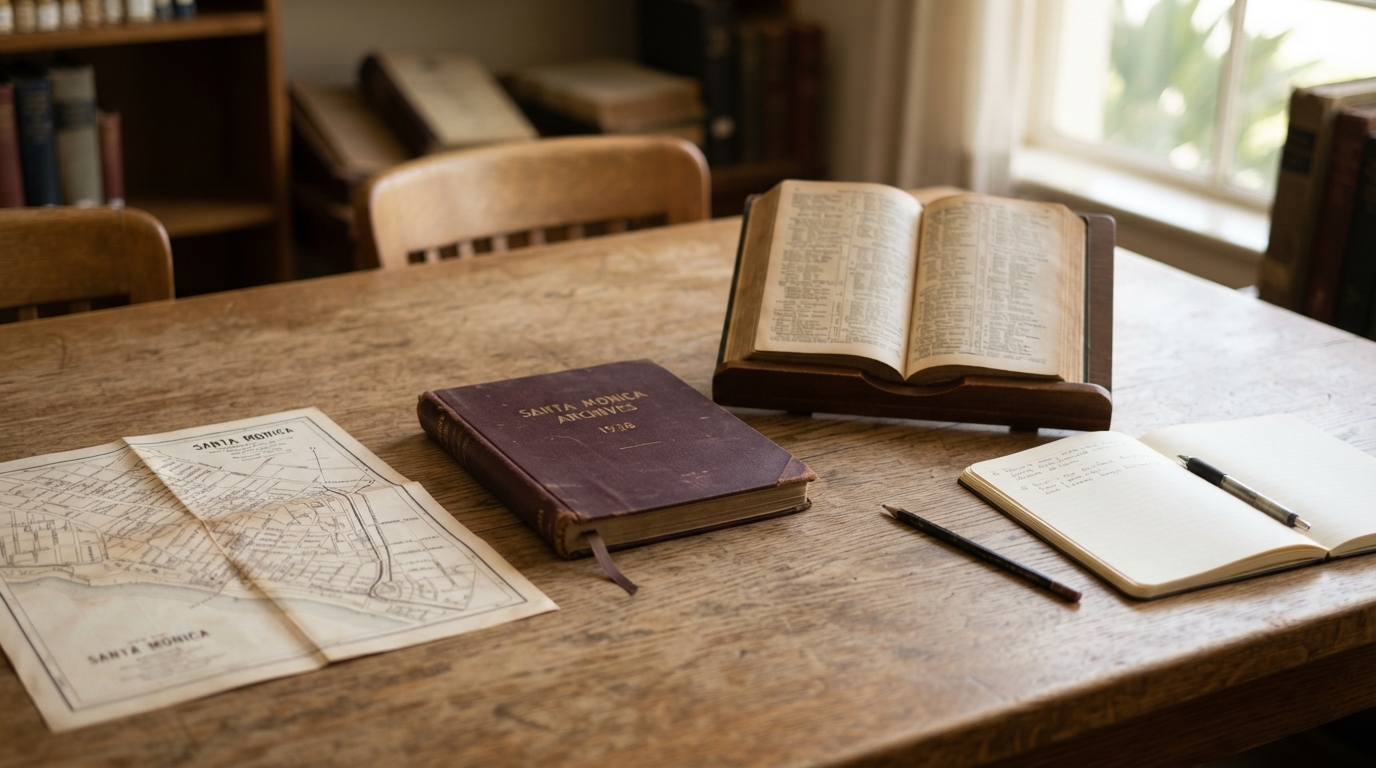
An unfamiliar address on a family photograph or a name in an old school book can be the beginning of a historical investigation. The challenge is deciding what to examine next. Santa Monica history research becomes more manageable when you connect one question with the records most likely to answer it.
The Santa Monica History Museum’s research collections offer several starting points. Maps can help locate a place, yearbooks can connect people with school activities, and directories can supply dated listings. Used together, these materials help turn a promising clue into an explanation someone else can check.
Start With One Question and the Right Collection
The museum’s Morley Builders Research Library lists Sanborn maps, street maps, telephone directories, school yearbooks, and bound Outlook newspaper editions. Access to the research library and special collections is by appointment.
Before requesting materials, narrow your goal. Instead of asking for everything about a neighborhood, try a question such as, “What evidence identifies the business shown in this photograph?” List the names, approximate dates, and locations you already know, marking uncertain details clearly.
Ask which years and formats are available for your subject. A collection description is not a guarantee that every edition survives or that every item is digitized. Confirm arrangements for consulting and copying materials before your visit.
Read Historical Maps for Location and Change
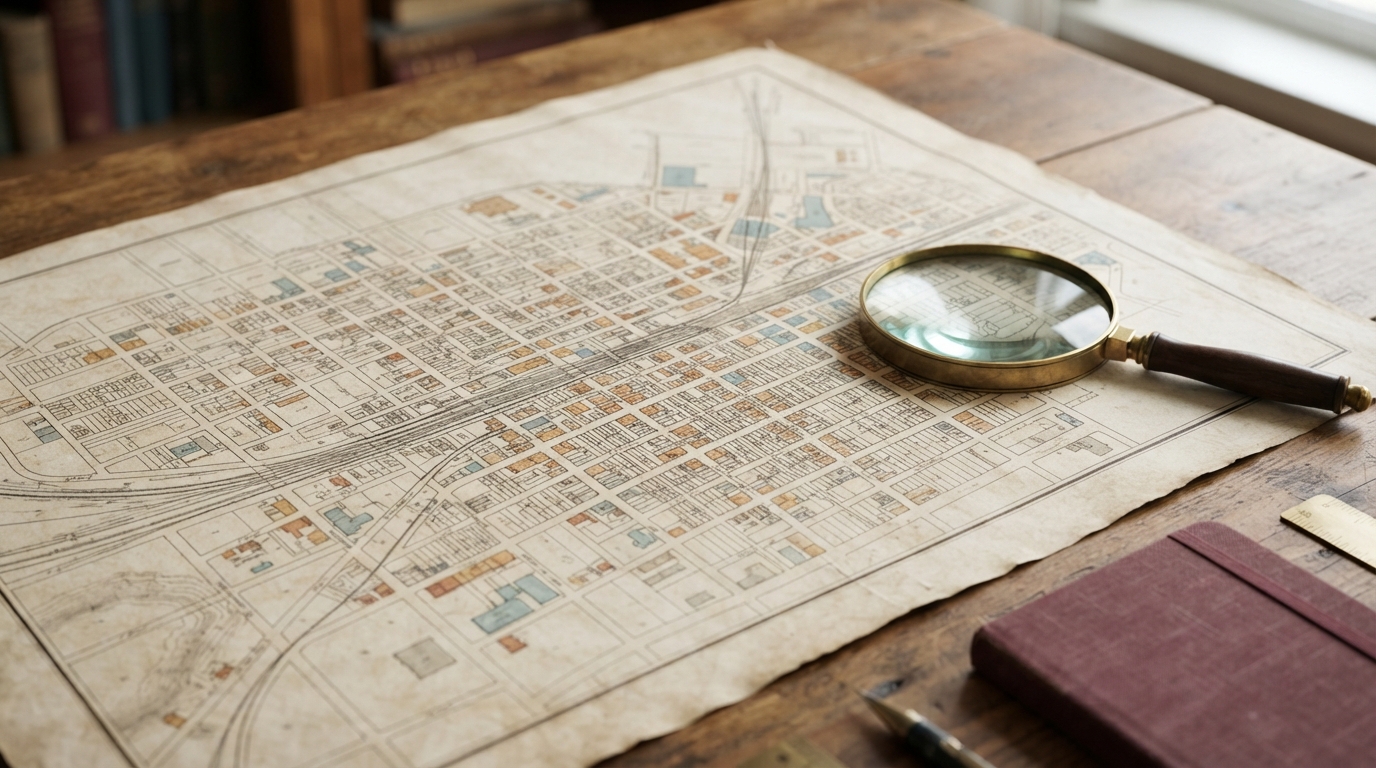
The museum identifies Akins Realty Maps among its research materials, alongside Sanborn and street maps. Begin by identifying the map’s title, creator, coverage, and date rather than assuming that every map answers the same questions.
The Library of Congress’s guide to interpreting Sanborn maps explains their origins in fire-insurance assessment. Their symbols and building information reflect that purpose. They are valuable evidence, but not complete portraits of neighborhood life.
Check the Legend Before Drawing Conclusions
Locate the key explaining colors and abbreviations, then record the sheet number and any revision dates. The Library of Congress cautions that street names and numbering systems can change, so do not assume a present-day address matches an older one exactly.
For a first exercise, compare one block across two dated maps. Note a changed outline, street label, or recorded use, then write a question about it. A difference suggests further investigation; by itself, it does not identify the owner or establish an exact construction date.
Use Yearbooks to Explore People and School Life
The museum reports a near-complete collection of Santa Monica High School yearbooks, plus volumes from Santa Monica City College, John Adams and Lincoln schools, and Venice High School. Confirm the particular school and year before planning a search.
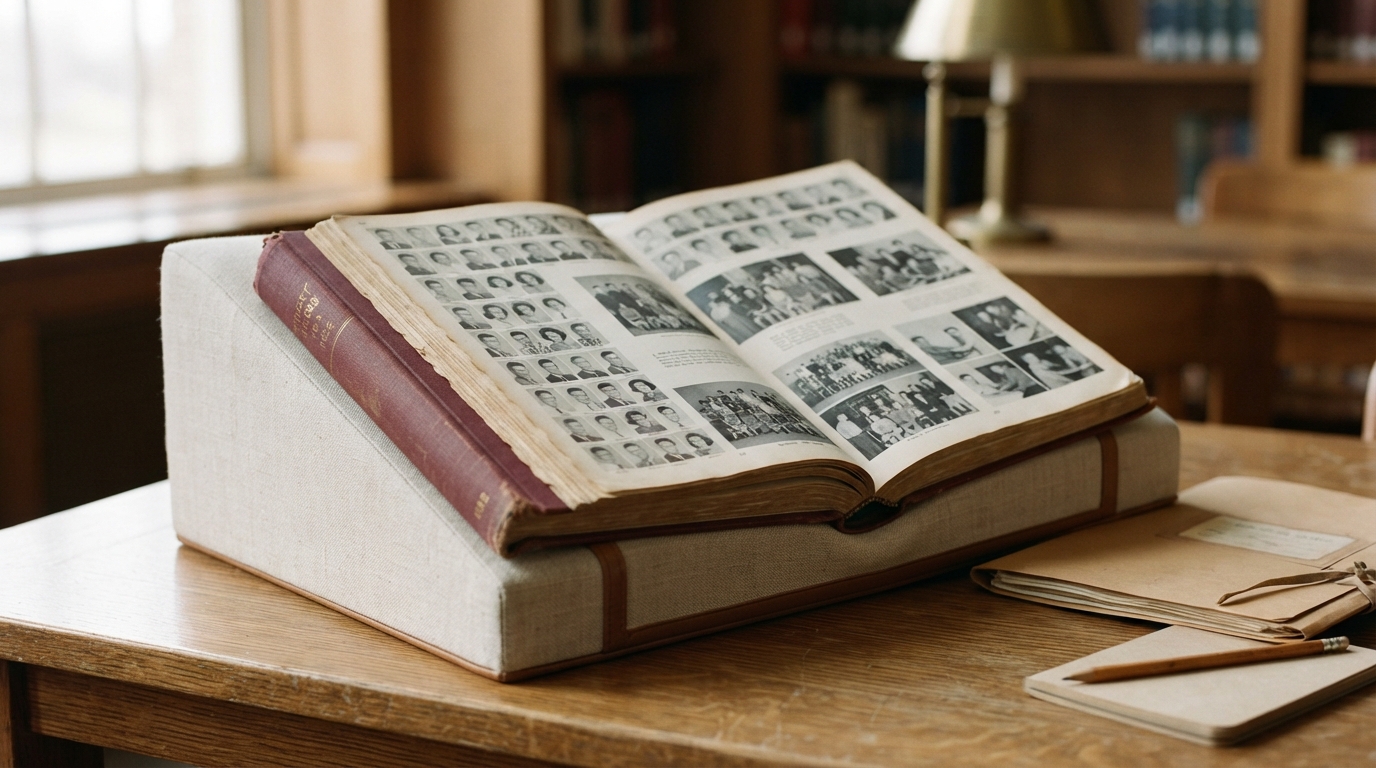
Start with the title page and publication year, then examine indexes, class sections, clubs, and event pages where available. Record how a person is identified rather than silently expanding initials or correcting an unfamiliar spelling.
Read Beyond a Portrait
Compare a portrait caption with other mentions in the volume. Does a club page supply a fuller name? Is an activity attached to a particular grade? A matching surname alone is not enough to establish that two entries describe the same person.
As a practice question, ask what the editors chose to emphasize about school life. Then note what you cannot learn from those pages. A yearbook is one published account, not a substitute for a complete educational record.
Keep handwritten inscriptions separate from printed captions in your notes. A personal message may raise a useful question, but do not assume its writer, date, or recipient unless other information identifies them.
Trace Names and Addresses Through Directories
The museum lists telephone directories dating back to 1913. For complementary research, the Santa Monica Public Library’s Santa Monica Collection Room also holds directories, maps, and yearbooks. These are separate holdings with their own advance-appointment arrangements.
Check the directory’s title, year, geographic coverage, and instructions first. Telephone directories and city directories are different publications; inspect what a particular edition records rather than expecting identical information.
Compare Listings Across Available Years
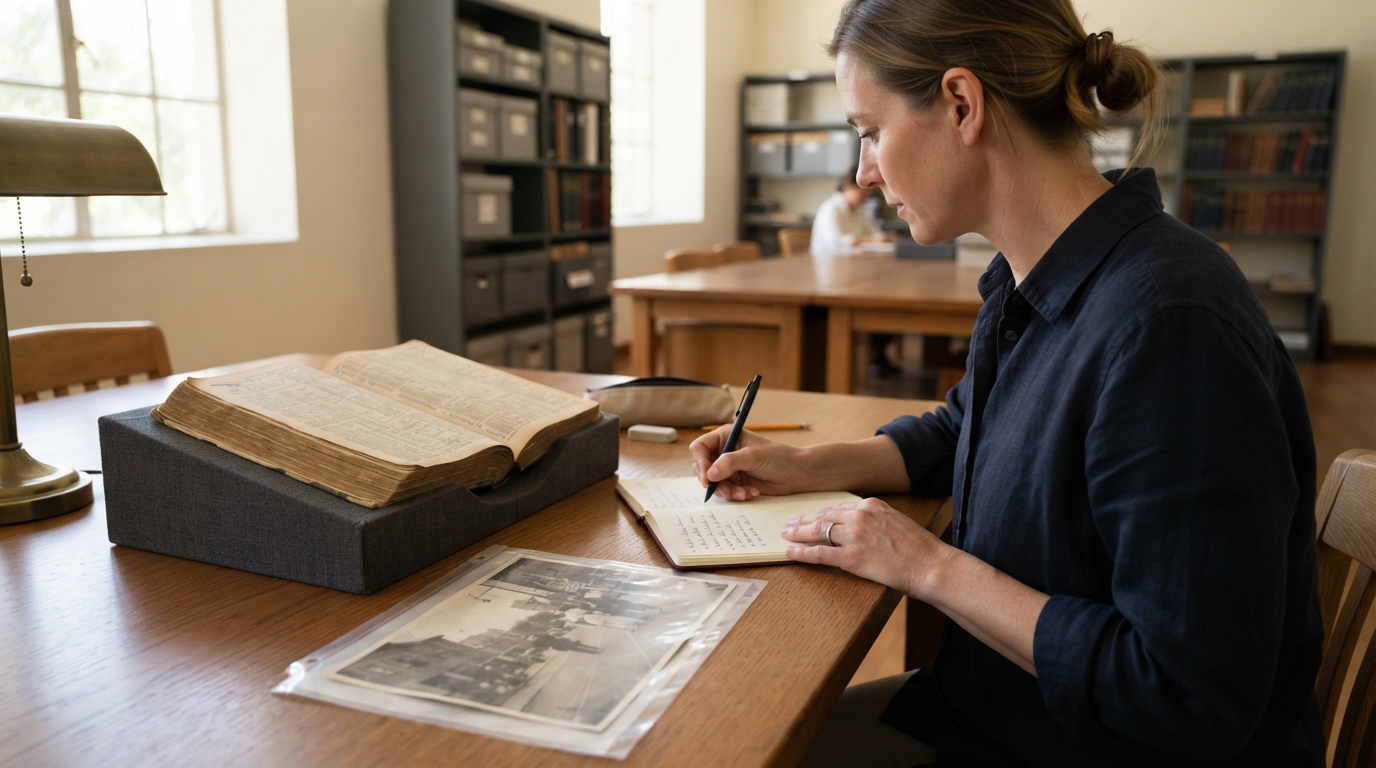
Copy a relevant entry exactly, including initials, address, and abbreviations. Use that volume’s abbreviation guide when available. Compare neighboring editions and record both matches and differences without immediately deciding what caused a change.
For a digital search, inspect the page image before saving a finding. Try spelling variants and nearby pages when a search returns nothing. Record the editions and sections already checked so an unsuccessful search still contributes to your work.
Suppose the same name appears at two addresses in different years. That could suggest a move, but first check whether you have identified the same person and whether the numbering changed. An absence from one directory is not, by itself, proof that someone left Santa Monica.
Connect the Clues Across Different Records
Imagine researching an unidentified storefront photograph. This is a suggested exercise, not a claim about a particular museum item. Begin with its catalog description, then look for a dated directory entry that matches the visible business name. Use an appropriate map to investigate the location.
Our guide to the Bill Beebe Collection and Santa Monica photographs offers examples of keeping dates and collection identifiers attached to images. That habit makes comparisons easier to revisit.
Newspaper coverage may provide another lead. The Corona typewriter and Outlook Collection article introduces the connection between museum objects and local newspaper history.
The National Archives’ document-analysis resources encourage close observation and consideration of context before using a source as evidence. When records disagree, preserve the disagreement in your notes. The task is to explain what each source supports, not force every detail into one tidy story.
Keep Useful Notes and Protect the Materials
Create a research log with the institution, collection name, item identifier, publication date, page or sheet number, and your observation. Add the link and access date for digital records. Keep exact transcriptions separate from your interpretation.
The National Archives’ research-room guidance emphasizes preserving record order and never placing writing paper over an original document. At the museum, follow staff instructions for supporting volumes, handling photographs, and using cameras. Ask before rearranging, flattening, or photographing anything.
Give saved images filenames that connect them with your log. Photograph a title page or identification label as well as the relevant entry when permitted; an isolated page can be difficult to identify later.
Before publishing an archival photograph, consult the museum’s reproduction guidance and confirm the conditions for your intended use. Keep its identifying caption and required credit with the image.
Finish your first session with one supported finding and one next question. A small, traceable discovery is a stronger foundation for Santa Monica history research than a detailed account built on guesses. Maps, yearbooks, and directories become most useful when each contributes something specific to the investigation.
This guide is published by an independent museum journal. It is not affiliated with or operated by the Santa Monica History Museum.